



Understand Your Credit
Credit Reports vs. Credit Scores: What You Need to Know
Your credit report is the detailed record. Your credit score is a number calculated from information in that record. They work together—but they are not interchangeable, and you have more than one of each.
People often say “check your credit” as though credit were one single item. In reality, you may be looking at a report from one bureau, a score calculated with one model, or a monitoring dashboard that combines pieces of both.
That distinction matters. A report can contain an error even when a score looks good. A score can change even when you do not see an obvious problem. And the score shown in a free app may not be the exact score a mortgage, auto, or credit-card lender uses.

The Detailed Record
Credit Report
A credit report is a file containing information about your credit activity and current account status. It may include payment history, balances, limits, account dates, collections, certain public records, and inquiries.
Think of it as: the source material. The Calculated Number
Credit Score
A credit score is a numerical estimate of credit risk created by applying a scoring model to information from a credit report at a particular time.
Think of it as: one interpretation of the source material.
01
What Is a Credit Report?
Equifax, Experian, and TransUnion are the three nationwide credit reporting companies. Each maintains its own file about you based on information it receives. A lender may report to all three, only one or two, or none at all. Updates may also arrive on different dates.
A typical report may include:
- Names, addresses, birth date, and other identifying information
- Credit cards, mortgages, auto loans, student loans, and other accounts
- Account balances, credit limits, payment status, and payment history
- Collection accounts and certain public records, such as bankruptcies
- Hard and soft inquiries showing who accessed the file
Your report generally does not include your bank balance, income, race, religion, or medical diagnosis. It also may not automatically include a credit score. Read Introduction to Credit Reports for a section-by-section review checklist.
You have three primary credit reports—not one universal report. Because the underlying data can differ, review Equifax, Experian, and TransUnion rather than assuming one report tells the complete story.
02
What Is a Credit Score?
A credit score summarizes selected report information into a number intended to help estimate the likelihood of repayment or default. Lenders may use scores when deciding whether to approve an application and what terms, rate, deposit, or credit limit to offer.
FICO and VantageScore are two well-known scoring brands, but each offers multiple models and versions. Lenders may also use specialized scores for mortgages, auto lending, or credit cards, as well as their own internal decision systems.
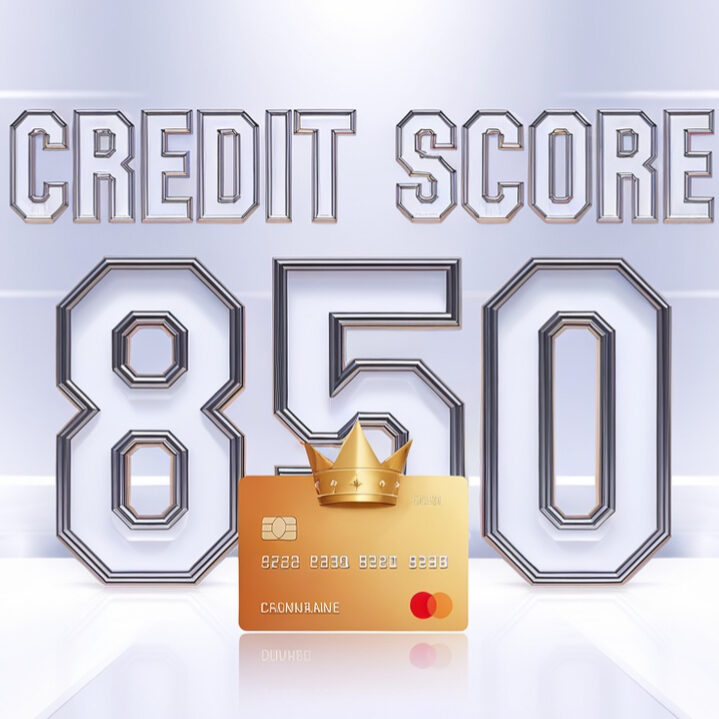
Many scores use a range from 300 to 850, but not every score uses that range. For example, some industry-specific scores use different ranges. A number without the model, version, bureau, and date is incomplete information.
You do not have one permanent credit score. Your score can differ based on the report used, scoring model, model version, lending purpose, and the day it is calculated.
03
Credit Report vs. Credit Score at a Glance
| Question | Credit Report | Credit Score |
|---|---|---|
| What is it? | A detailed file of credit-related information. | A number calculated from report data using a scoring model. |
| Who creates it? | A consumer reporting company such as Equifax, Experian, or TransUnion. | A scoring model such as a FICO or VantageScore model, using bureau data. |
| What does it show? | Accounts, balances, payment history, inquiries, collections, and identifying details. | A summarized risk estimate at a particular moment. |
| Do you have more than one? | Yes. The three nationwide bureaus maintain separate files. | Yes. You can have many scores based on different models, versions, bureaus, products, and dates. |
| Can you dispute it? | You can dispute inaccurate or incomplete report information. | You generally address a questionable score by checking and correcting the underlying report data, not disputing the number itself. |
| Can you get it free? | Official free reports are available from AnnualCreditReport.com. | Some banks, card issuers, bureaus, lenders, and services provide free scores, but the model may differ from a lender’s score. |

04
How Reports and Scores Work Together
A scoring model does not invent your history. It evaluates eligible information appearing in a selected credit report. If the report changes, a newly calculated score may change. If the bureau data differs, scores calculated with the same general model can differ across bureaus.
Commonly evaluated categories include payment history, debt and revolving utilization, length of credit history, new credit activity, and credit mix. The exact impact depends on the model and your entire file. Learn more in How Credit Scores Are Calculated.
A useful analogy
Your credit report is like a school transcript listing classes and grades. A credit score is more like a GPA calculated from that information. If one transcript is missing a course or contains the wrong grade, the calculated result may also be different.
05
Why the Score You See May Differ From a Lender’s
- Different bureau: Your app may use TransUnion data while the lender uses Experian or Equifax.
- Different model: You may see VantageScore while the lender uses a FICO model—or the reverse.
- Different version: The lender may use an older, newer, or industry-specific version.
- Different date: A balance or account update may have reached the file between the two calculations.
- Different purpose: Mortgage, auto, and credit-card decisions may use scores designed for that type of lending.
The Consumer Financial Protection Bureau confirms that consumers have many scores and that results can vary by bureau, model, loan type, and calculation date.
A free educational score can still be useful for tracking general trends. Just avoid treating it as a guaranteed preview of a lender’s decision.
06
How to Check Your Credit Reports
Use AnnualCreditReport.com, the federally authorized site for free reports from Equifax, Experian, and TransUnion. Free weekly online reports are currently available. You may request all three together or review them on a schedule.
- Request all three before an important application. This gives you the clearest view of differences and potential errors.
- Review every section. Check identifying information, accounts, balances, payment history, collections, dates, and inquiries.
- Compare bureau data. A difference is not automatically an error, but incorrect information should be investigated.
- Save reports securely. They contain sensitive personal data and should not be stored on a public or shared device.
- Dispute genuine inaccuracies. Contact both the bureau displaying the error and the company that furnished it.
Checking your own report does not lower your score. Our guide to how often to check your credit report can help you create a schedule.
07
How to Check and Compare Credit Scores
Scores may be available from your bank, credit-card issuer, lender, a bureau, or a monitoring service. When viewing any score, write down:
- The scoring brand and model, such as FICO or VantageScore
- The model version, if disclosed
- The credit bureau whose data was used
- The calculation or update date
- Whether the score is general-purpose or industry-specific
Compare like with like. A FICO score based on Equifax data today should not be treated as directly equivalent to a different model based on TransUnion data last month.
Want to Track Reports and Score Changes?
Credit monitoring can make ongoing review easier, but compare bureau coverage, score models, alert types, pricing, trial terms, and cancellation rules before enrolling.Check Your Credit & Explore Monitoring
Compare credit-monitoring apps
08
Which One Should You Focus On?
Start with your reports. They contain the underlying information that scoring models evaluate. Correcting an inaccurate account, payment status, balance, or inquiry begins at the report level.
Then use scores to track your general standing and understand how lenders may evaluate risk. Before a major application, ask the lender which bureau and scoring system it typically uses if that information is available—but remember that approval depends on more than a score.
Focus on reports when…
- Checking for errors or identity theft
- Reviewing account details
- Filing or following a dispute
- Comparing bureau information
Focus on scores when…
- Tracking an overall credit trend
- Preparing for a loan application
- Learning which factors may be influential
- Comparing the same model over time

09
Frequently Asked Questions
Does a credit report include my score?
Not necessarily. Reports and scores are separate products. Some services show both, but the official free report itself may not include a score.
Can I have a good score and still have an error?
Yes. A score cannot confirm that every report item is accurate. Review the full report even when the score looks strong.
Why do my scores differ by 20, 50, or more points?
Differences can come from bureau data, model type, model version, product type, and calculation date. Compare those details before assuming something is wrong.
Can I dispute a credit score?
You generally dispute inaccurate or incomplete information in the underlying report. If the report data is corrected, a newly calculated score may change.
Which score matters most?
The score used by the lender for the specific application matters most in that decision. No single score is universally used by every lender.
The Bottom Line
A credit report shows the details; a credit score summarizes selected details through a particular model. Review all three reports for accuracy, track scores with their model and bureau context, and never let one number replace a careful look at the underlying data.
Know the Details Behind the Number
Start with your official reports, then use consistent score tracking to understand your direction over time.Request Your Official Free ReportsExplore Credit Monitoring
Affiliate disclosure: This article may contain affiliate links. If you use one, The Credit Queen may earn a commission at no additional cost to you. This content is for educational purposes and is not legal, tax, or individualized financial advice.