



Credit Protection Guide
Understanding the Benefits of Credit Monitoring
Credit monitoring cannot prevent every form of fraud, but it can help you notice important changes sooner and respond before a small problem becomes a financial headache.
Your credit should never be “out of sight, out of mind.”
Your credit history may influence whether you qualify for a credit card, car loan, apartment, mortgage, and other financial opportunities. Monitoring it gives you a clearer view of what lenders may see—and lets you act when something does not look right.
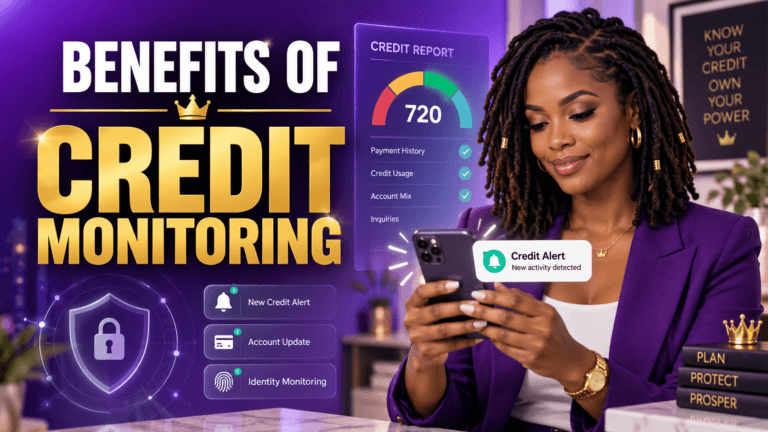
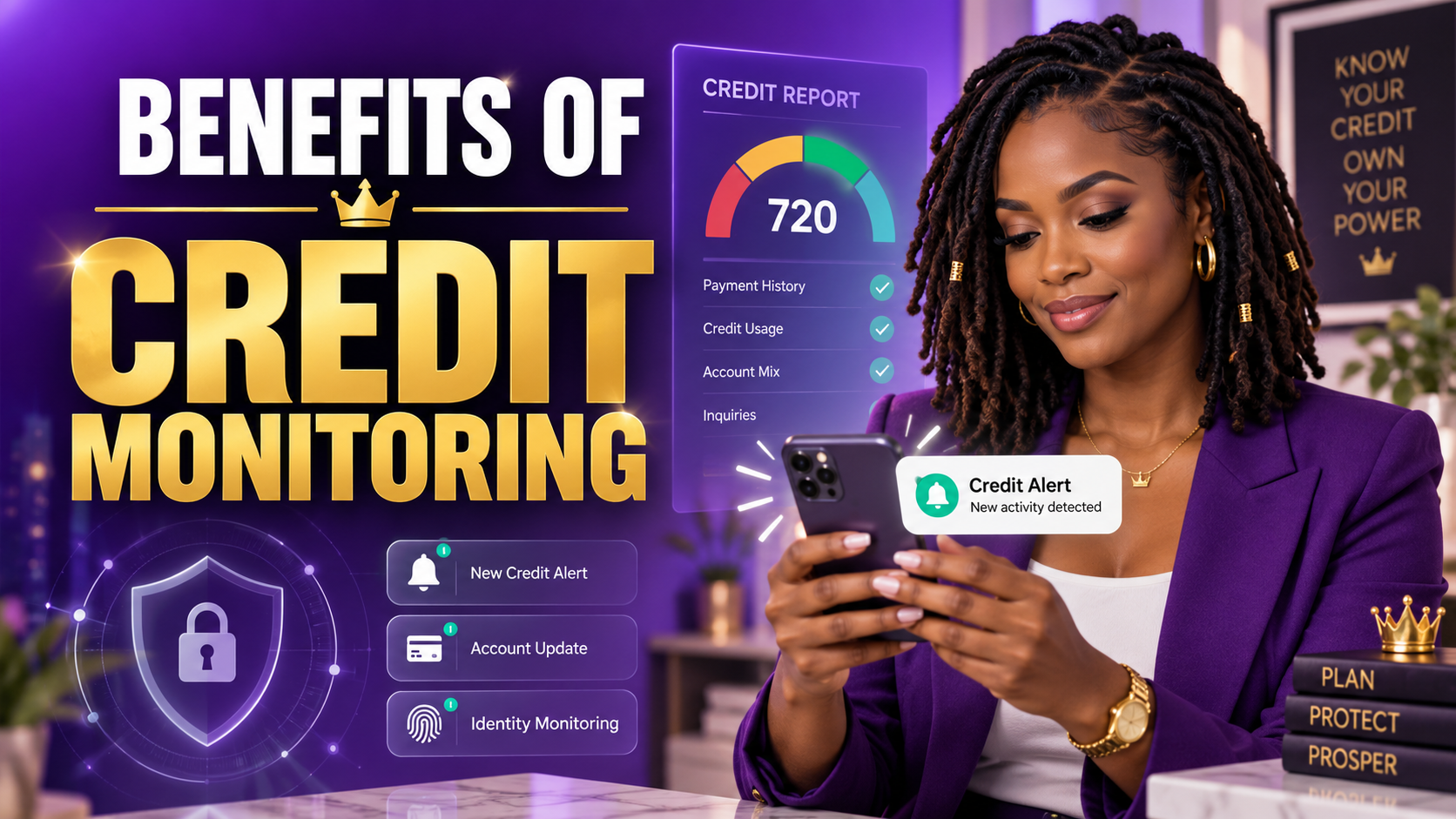
Most of us do not check our credit until we are ready to apply for something. Then, right when the lender pulls the report, an unfamiliar account, incorrect balance, or missed payment appears. Credit monitoring is designed to reduce those surprises by watching for certain changes and sending alerts by email, text, or through an app.
According to the Consumer Financial Protection Bureau, credit monitoring services generally watch credit reports and alert consumers to changes in the accounts listed there. Features, bureau coverage, alert speed, and prices vary, so it is important to compare the details before enrolling.
Affiliate disclosure: This page may contain affiliate links. If you use one, The Credit Queen may earn a commission at no additional cost to you.
What credit monitoring can alert you about
Depending on the plan and the credit bureaus it covers, a monitoring service may notify you about:
- A new credit inquiry after someone applies for credit using your information.
- A newly reported account, such as a credit card or loan.
- Balance or utilization changes on existing accounts.
- Late payments, collections, or other negative updates reported to a covered bureau.
- Personal-information changes, such as a new address appearing on your file.
- Credit-score movement when score tracking is included.
Important: An alert does not automatically mean fraud occurred. It is a signal to review the change, confirm whether you recognize it, and take action if necessary.
Seven important benefits of credit monitoring
1. It may help you spot suspicious activity sooner
If you receive an alert for an account or inquiry you do not recognize, you can investigate immediately instead of discovering it months later. Early detection may limit the amount of time an identity thief has to continue using your information.
2. It keeps your credit on your radar
Credit improvement is usually a pattern of small, consistent decisions—not one dramatic move. Regular alerts can remind you to watch balances, payment history, account status, and other information. If building stronger credit is your goal, read Building Credit the Smart Way.
3. It can reveal reporting errors
Not every unexpected change is identity theft. A creditor might report an incorrect balance, a paid account could still appear unpaid, or someone else’s information could be mixed with yours. Monitoring may bring a change to your attention, but you should review the underlying report and dispute inaccurate information with the appropriate credit bureau and information provider.
4. It helps you prepare before applying
Watching your credit before a major application gives you time to review errors, lower card balances, and avoid unnecessary new applications. It does not guarantee approval or a particular interest rate, but fewer surprises can help you approach a lender more confidently.
5. It helps you understand what affects your credit
When a tracked score changes, you can compare that movement with recent activity. Just remember that consumers can have multiple credit scores, and the score shown by a monitoring app may not be the exact model a lender uses. Learn more in Demystifying Credit Scores.
6. Alerts can create a useful financial routine
A monthly credit check-in can encourage better habits: review statements, verify payments, watch card utilization, update passwords, and investigate unfamiliar activity. Monitoring works best when the alerts lead to action.
7. It can provide peace of mind
You should not have to obsess over your credit every day. A well-chosen service can act like a notification system in the background, helping you pay attention when something meaningful changes.
What credit monitoring does not do
This is where many consumers get confused: credit monitoring is an alert tool, not a complete shield.
- It does not stop someone from applying for credit in your name.
- It may not detect activity that is not reported to the bureau being monitored.
- It does not automatically correct errors or remove legitimate negative information.
- It does not replace reviewing your full credit reports.
- It generally cannot prevent misuse of a bank account, tax identity, Social Security number, or medical identity that never appears on a credit report.
If you are especially concerned about someone opening new accounts, consider a free credit freeze or fraud alert. The Federal Trade Commission explains that these tools make it harder for scammers to open new credit accounts, while monitoring mainly tells you about changes.
Credit monitoring versus checking your credit report
| Credit monitoring | Credit-report review |
|---|---|
| Sends alerts about selected changes | Lets you inspect the complete report available to you |
| May cover one, two, or all three bureaus | Can be requested from Equifax, Experian, and TransUnion |
| May be free or paid | Free weekly online reports are available through the federally authorized site |
You can request free weekly online reports from all three nationwide bureaus at AnnualCreditReport.com. Monitoring and manual reviews work well together: alerts flag changes, while a full report helps you inspect the details.
How to choose a credit-monitoring service
Before signing up, ask these questions:
- Which credit bureaus are monitored? Three-bureau monitoring offers broader coverage than one-bureau monitoring.
- What changes trigger an alert? Look beyond vague promises and review the actual feature list.
- How quickly are alerts delivered? Faster notifications can help you respond sooner.
- Is score tracking included? Check which score model and bureau are used.
- What will it cost after any trial? Read cancellation and renewal terms carefully.
- How is your information protected? Use a unique password and enable multifactor authentication when available.
- Does it include recovery assistance? If so, understand what help is actually provided and what any insurance does—or does not—cover.
For additional comparisons, see The Best Credit Monitoring Apps and Credit Alerts Explained.
What to do when you receive an unfamiliar alert
- Open the service directly—not through a suspicious email link—and review the alert.
- Check the relevant credit report and account statements.
- Contact the lender or creditor using a trusted phone number if you do not recognize the activity.
- Dispute inaccurate credit-report information with the bureau and the company that supplied it.
- If identity theft is involved, report it at IdentityTheft.gov and follow the recovery plan.
- Consider freezing your credit with all three nationwide credit bureaus.
The bottom line
Credit monitoring is valuable because it provides awareness. It can alert you to important changes, support better credit habits, and help you react faster to possible errors or fraud. But it is most effective when combined with full credit-report reviews, strong account security, and a credit freeze when appropriate.
You do not need to fear your credit—you need a clear routine for watching it, understanding it, and protecting it.
Start Monitoring Your Credit →
Educational disclaimer: This article provides general educational information and is not legal, financial, or credit-repair advice. Credit results vary, and no product can guarantee a specific credit-score increase.