

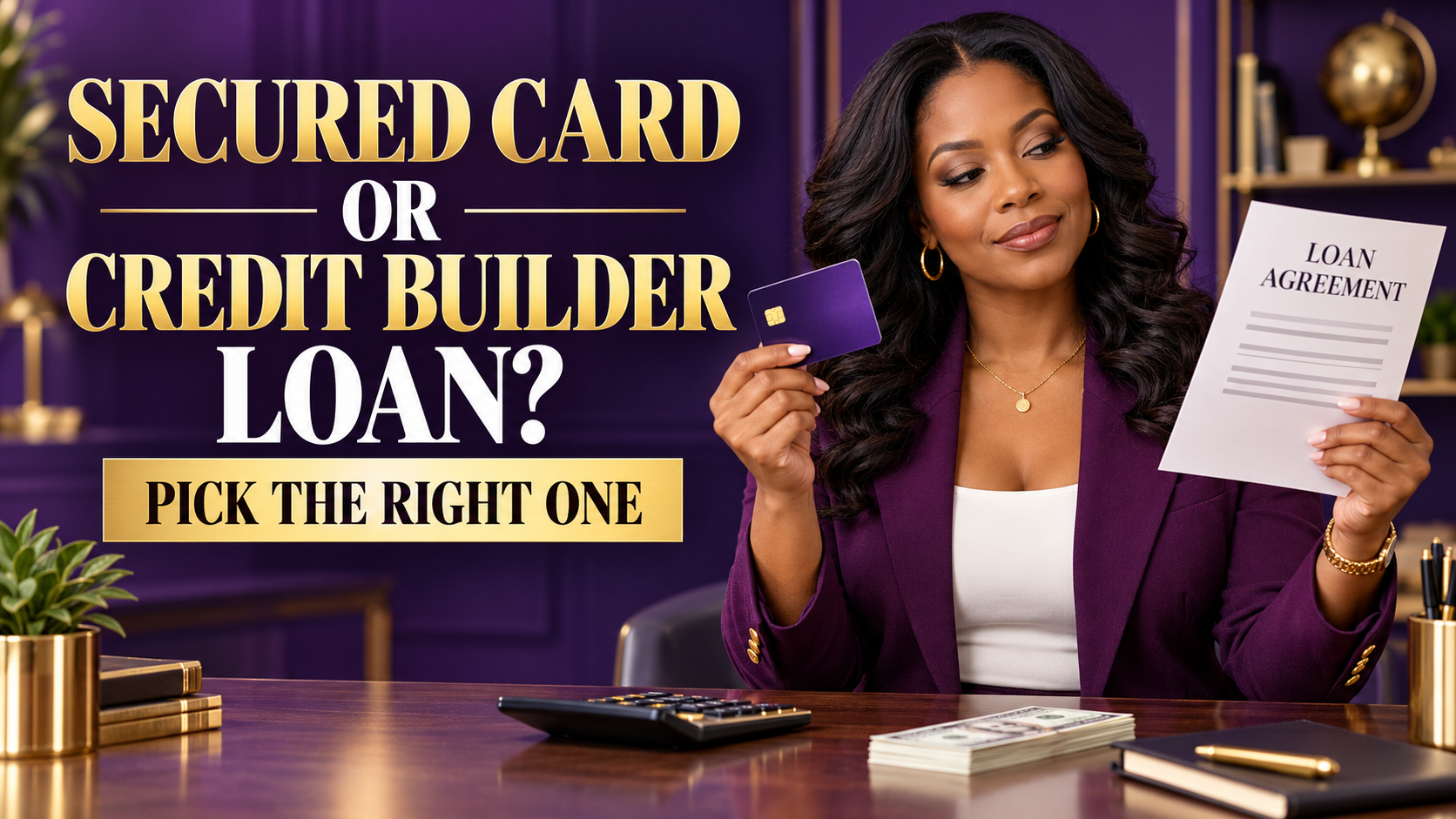
You do not need every credit-building product you see advertised. You need the one that fits your actual finances without creating a payment you cannot manage.
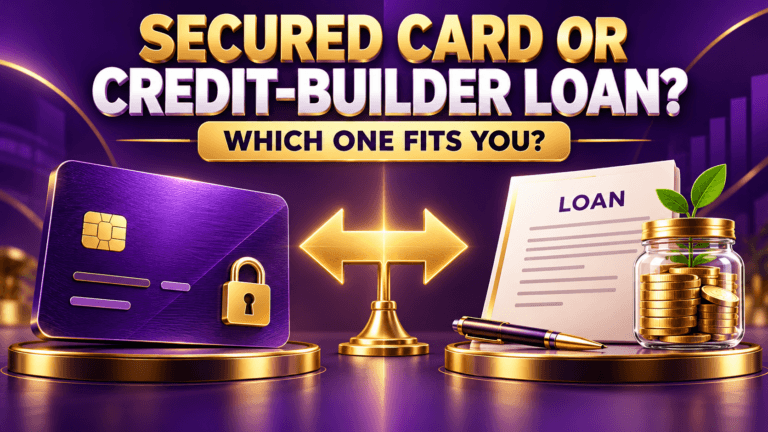
A secured credit card and a credit-builder loan can both add positive payment activity to your credit reports. But they use your money differently, affect your credit profile differently and create different risks.
The better choice depends on three things: how much cash you have today, how much room you have in your monthly budget and what is currently holding down your credit score.
The short answer
- Choose a secured card when you can afford the refundable deposit, need a card for small purchases and can keep the reported balance low.
- Choose a credit-builder loan when upfront cash is limited, you prefer a fixed payment and you do not want access to a reusable spending limit.
- Choose neither right now if another monthly payment could make you late on existing bills.

How a secured credit card works
A secured credit card usually requires a refundable cash deposit. The card issuer holds the deposit as security, and the deposit commonly determines your starting credit limit.
For example, depositing $300 may give you a $300 credit limit. The deposit does not pay your monthly bill. If you spend $40, you must still pay that $40 according to the card agreement.
You can use the card repeatedly, up to its available limit, as long as you make payments. Some issuers may eventually review the account for graduation to an unsecured card and return the deposit. Graduation is not automatic unless the card agreement says so.
Secured-card strengths
- Creates a revolving credit account
- Can be used for small purchases
- Deposit may be refundable
- May eventually graduate to an unsecured card
- Can remain open after the initial credit-building period
Secured-card risks
- Requires money upfront
- High balances can increase utilization
- Interest may apply if you carry a balance
- Annual or maintenance fees may apply
- Easy access to credit can encourage overspending
How a credit-builder loan works
A credit-builder loan generally does not hand you the loan proceeds at the beginning. Instead, the lender places the money in a locked savings account or certificate of deposit.
You then make fixed monthly payments. The lender reports the account and payment activity according to its reporting policy. At the end of the term, you receive the saved principal minus any applicable interest and fees.
It works more like structured savings with an installment-loan tradeline than a traditional loan that gives you spending money today.
Credit-builder loan strengths
- Often requires little or no large upfront deposit
- Provides a predictable monthly payment
- Adds an installment account to your reports
- Does not create a reusable spending limit
- Can help you accumulate savings
Credit-builder loan risks
- You usually cannot access the money immediately
- Interest and fees reduce the final payout
- Late payments may damage your credit
- The account eventually closes after completion
- Some plans keep you committed for 24 months or longer
Secured card versus credit-builder loan
| Question | Secured credit card | Credit-builder loan |
|---|---|---|
| Upfront cash | Usually requires a refundable security deposit | Often starts without a large security deposit |
| Monthly obligation | Depends on spending and the card’s minimum-payment formula | Fixed scheduled payment |
| Access to money | You may use the credit limit for purchases | Loan funds are generally locked until payments are completed |
| Account type | Revolving credit | Installment credit |
| Utilization | Balances affect revolving utilization | No revolving credit-utilization percentage |
| Overspending risk | Higher because the available limit can be reused | Lower because there is no purchase limit to spend |
| Interest | Avoidable when eligible purchases are paid in full by the due date | Usually built into the loan’s total cost |
| After completion | May remain open or graduate | Usually closes and releases the saved funds |
Pick based on the cash you have today
If you have $200 or more available without touching bill money
A secured card may make sense if the deposit will not interfere with rent, food, utilities, transportation or your emergency fund.
Use the card for one small recurring expense, such as a streaming subscription, and pay the statement balance in full. You do not need to carry a balance or pay interest to build credit.
If you cannot afford a deposit but can afford a small monthly payment
A credit-builder loan may fit better. Instead of tying up several hundred dollars immediately, you build the balance through scheduled payments.
But “small monthly payment” does not automatically mean inexpensive. Multiply the payment by the number of months, add setup or membership fees and compare that total with the amount you will receive.
If your income changes from month to month
Be careful with either product. A credit-builder loan requires a fixed payment even during a slow month. A secured card allows you to control spending, but it can become expensive debt if you use it to fill income gaps.
Your safest choice may be to wait until you have a small emergency cushion and more predictable cash flow.
Pick based on what is affecting your score
You have no open credit card
A well-managed secured card may add useful revolving-credit history. The key phrase is well managed: keep the reported balance low and pay on time.
You already have credit cards with high balances
Opening another account may not address the real problem. Your priority should usually be reducing existing balances, avoiding new charges and preventing late payments.
A credit-builder loan will not erase high utilization on your current cards. Do not add another payment unless your budget can safely support it.
You have a thin file with no installment account
A credit-builder loan can add installment activity while helping you save. However, credit mix is only one part of a score. Do not pay excessive fees merely to check an “installment loan” box.
Your score is low because of collections or late payments
Neither product removes accurate negative information. A new account may add positive activity over time, but you should also review your reports, correct genuine errors and address unresolved accounts strategically.
Start with our guide to spotting errors on your credit report.
Your credit is already fair and improving
Check whether you can prequalify for an unsecured card without a hard inquiry before tying up a deposit or paying credit-builder loan interest. Only apply for credit you actually need.

When a secured card is probably the better choice
- You can afford the deposit without borrowing it.
- You do not currently have an open revolving account.
- You want a card for one or two small expenses.
- You can pay the statement balance in full every month.
- You are confident that an available limit will not tempt you to overspend.
- The issuer reports to all three major credit bureaus.
- The card has reasonable fees and a clear deposit-return policy.
When a credit-builder loan is probably the better choice
- You cannot comfortably provide a large deposit today.
- You can reliably afford a fixed monthly payment.
- You prefer forced savings over access to a credit limit.
- You are concerned that a credit card could lead to overspending.
- You want installment activity on an otherwise thin credit file.
- The provider reports to all three major credit bureaus.
- The total interest and fees are reasonable for your budget.
Two credit-builder loan options to examine
If a credit-builder loan fits your situation better, Self and CreditStrong both offer online credit-building products. Neither guarantees that your score will increase, so compare current costs and terms before enrolling.
Explore Self Explore CreditStrongThese are affiliate links. Test both redirects in a private browser before publishing.
Should you open both?
Usually not at the beginning. Opening both creates two new accounts, two sets of terms and at least one additional monthly obligation.
Start with the product that solves the clearest gap in your credit profile. Manage it successfully for several months before considering whether another account would provide a genuine benefit.
Credit building should make your financial life more stable—not more complicated.
Questions to ask before applying
- Does the company report to Equifax, Experian and TransUnion?
- Is there a hard credit inquiry?
- What is the total amount I will pay?
- Are there annual, setup, membership or maintenance fees?
- When and how can I get my deposit or savings back?
- What happens if I close the account early?
- Is there a late fee or penalty APR?
- Can I manage the account without risking essential bills?
Frequently asked questions
Which one builds credit faster?
Neither product is guaranteed to build credit faster. Results depend on when the account is reported, your existing credit profile, your balances and whether every payment is made on time.
Do I need to carry a secured-card balance?
No. Carrying a balance is not required to build credit. Paying the statement balance in full can help you avoid purchase interest while still creating payment history.
Will I get my secured-card deposit back?
Deposits are generally refundable when the account is closed in good standing or upgraded according to the issuer’s terms. Outstanding balances or fees may affect the amount returned.
Does a credit-builder loan give me cash immediately?
Usually not. The funds are generally held in a locked account and released after you complete the required payments, minus applicable interest and fees.
Can either product remove collections?
No. A secured card or credit-builder loan can add new account activity, but it cannot remove accurate collections, charge-offs or late payments.
The Credit Queen’s recommendation
If you have deposit money and strong spending discipline, start by comparing secured cards. Look for three-bureau reporting, low fees and a path to an unsecured card.
If you have limited upfront cash and prefer a fixed plan, compare credit-builder loans. Choose the lowest affordable payment and review the total finance charge.
If you are already struggling to make payments, choose neither. Protect your current accounts, reduce balances and stabilize your budget first. Avoiding another late payment can matter more than opening another tradeline.
Continue learning
Read Building Credit the Smart Way, learn how to start building credit with no money, and review whether personal loans help or hurt your score.
For independent consumer guidance, visit the Consumer Financial Protection Bureau’s credit-building guide.
Educational disclaimer: This article provides general educational information and is not individualized financial, legal or credit-repair advice. Product terms and credit outcomes vary. Verify all rates, fees, reporting practices and eligibility requirements directly with the provider.