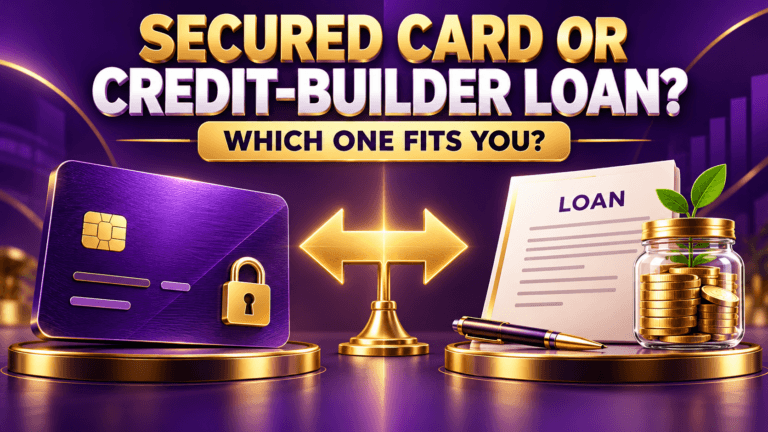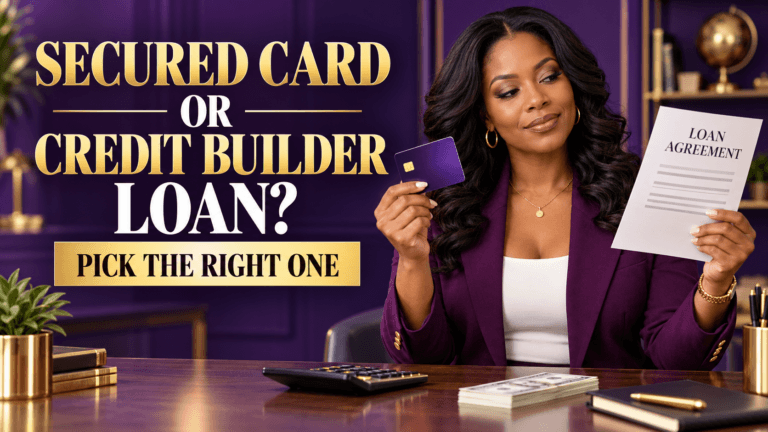



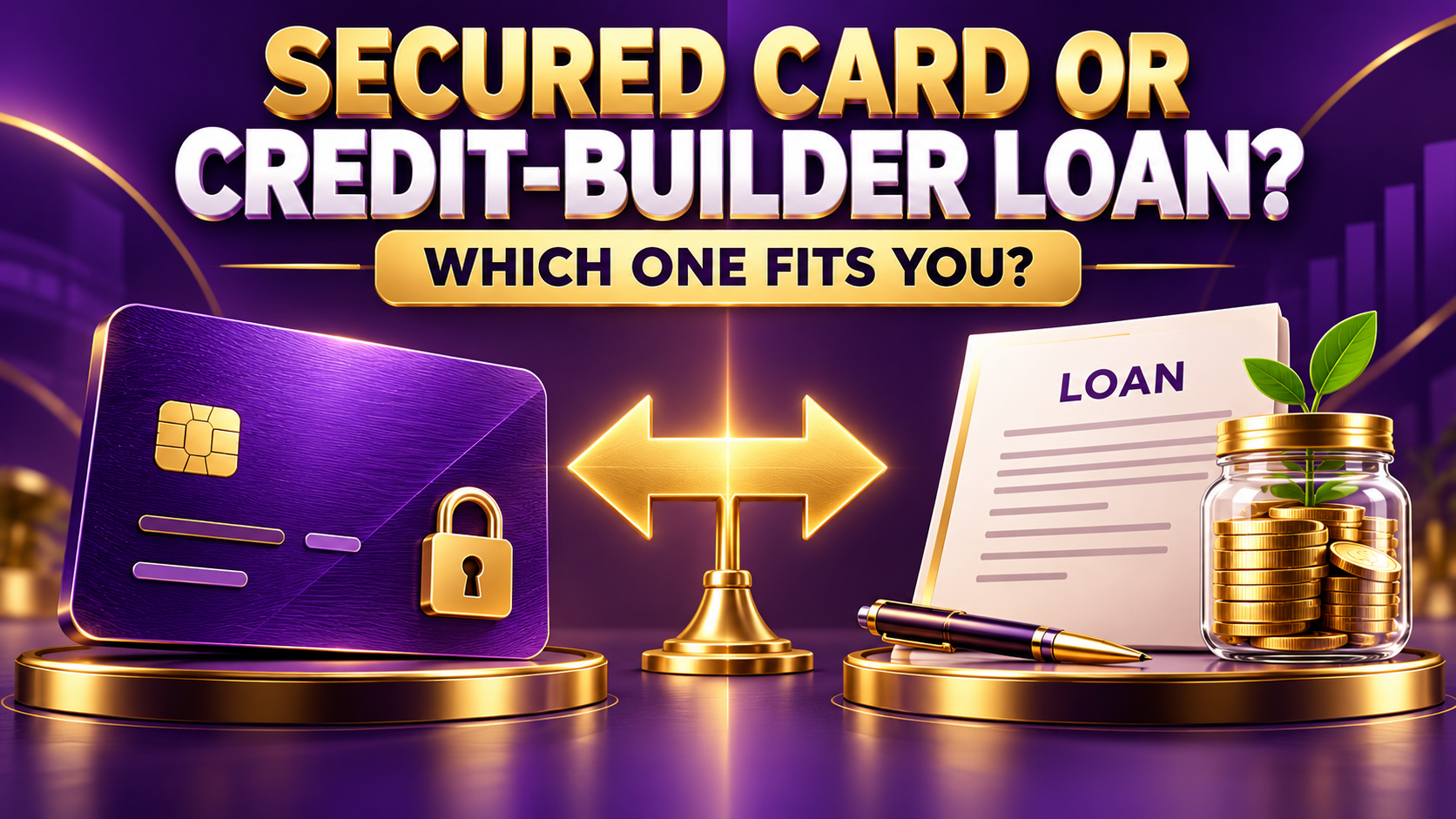
A secured credit card and a credit-builder loan can both add positive information to your credit reports—but they are not interchangeable.
One requires money upfront and gives you a reusable credit limit. The other usually requires monthly payments before you receive the saved loan funds.
The better option depends on how much cash you have today, how predictable your monthly income is, whether you already have credit cards and how confident you are about controlling spending.
The short answer
- A secured card may fit better when you can afford the refundable deposit, need revolving credit and can keep the balance low.
- A credit-builder loan may fit better when upfront cash is limited, you prefer a fixed payment and you want structured savings.
- Neither may be appropriate when another account could cause you to miss an existing payment.

How a secured credit card works
A secured credit card generally requires a refundable cash deposit. In many cases, the amount deposited becomes the starting credit limit.
For example, a $300 deposit may support a $300 credit limit. The card issuer holds the deposit as security, but the deposit does not pay your monthly bill. If you charge $40, you must still repay that $40 according to the card agreement.
A secured card works like other revolving credit cards. You can make purchases, repay the balance and use the available limit again. The issuer may report your account activity to one or more credit bureaus.
Some secured cards may eventually graduate to unsecured cards and return the security deposit. This is not automatic unless the issuer’s terms say so.
Potential advantages
- Creates revolving-credit history
- Can remain open for an extended period
- May be used for small planned purchases
- Deposit may be refundable
- Some cards offer a path to an unsecured account
Potential drawbacks
- Requires money upfront
- High reported balances may increase utilization
- Interest may apply when a balance is carried
- Annual or monthly fees may apply
- Easy access to credit may encourage overspending
How a credit-builder loan works
A credit-builder loan normally works in reverse from a traditional personal loan. Instead of receiving the borrowed money immediately, the lender generally places it in a locked savings account or certificate of deposit.
You make scheduled payments for the agreed term. The lender may report your payment activity to the credit bureaus. After the agreement is completed, you receive the saved principal minus applicable interest and fees.
This structure can help establish installment-payment activity while encouraging savings. However, it does not provide emergency cash at the beginning.
Potential advantages
- Often avoids a large upfront deposit
- Provides a predictable scheduled payment
- Adds an installment account when reported
- Does not provide a reusable limit to spend
- May help accumulate savings
Potential drawbacks
- You usually cannot access the funds immediately
- Interest and fees reduce the final payout
- Late payments may damage your credit
- The account normally closes when completed
- Some agreements last two years or longer
Secured card versus credit-builder loan
| Feature | Secured credit card | Credit-builder loan |
|---|---|---|
| Upfront cash | Usually requires a refundable security deposit | Usually does not require a large deposit at opening |
| Monthly obligation | Depends on spending and the minimum-payment formula | Fixed scheduled payment |
| Access to money | The credit limit can be used for purchases | Funds are generally locked during repayment |
| Account type | Revolving credit | Installment credit |
| Utilization | The reported balance affects revolving utilization | Does not create a revolving-utilization percentage |
| Overspending risk | Higher because the available limit can be reused | Lower because there is no purchase limit to use |
| Interest | May be avoided on eligible purchases by paying the statement balance in full by the due date | Normally included in the loan’s total cost |
| After completion | May remain open or graduate, depending on the issuer | Normally closes and releases the saved funds |
Choose based on the cash you have
You have enough for a deposit without touching bill money
A secured card may be worth considering if the deposit will not interfere with housing, food, transportation, utilities, insurance or emergency savings.
The safest approach is generally to use it for one small planned expense and pay the statement balance in full by the due date.
You cannot afford a deposit but can manage a monthly payment
A credit-builder loan may fit better because you build the savings balance through scheduled payments instead of depositing several hundred dollars immediately.
Do not judge the loan by its monthly payment alone. Multiply the payment by the number of months and add every setup, administrative, membership and interest charge.
Your income changes from month to month
Proceed carefully with either product. A credit-builder loan requires its scheduled payment during slow months. A secured card may become expensive if it is used to cover routine income shortages.
Waiting until your cash flow is more predictable may be safer than opening another account immediately.
Choose based on your current credit profile
You do not have revolving credit
A properly managed secured card may add revolving activity. Confirm that the issuer reports to all three nationwide credit bureaus and keep the reported balance manageable.
Your existing cards are nearly maxed out
Opening another account may not address the main problem. Reducing current balances and protecting existing payments may be more useful than adding another obligation.
You have little reported credit history
Either account may add payment activity when properly reported. A secured card adds revolving credit, while a credit-builder loan adds installment credit.
Credit mix is only one scoring consideration. Do not pay excessive fees merely to add a different account type.
You have collections or previous late payments
Neither product removes accurate negative information. A new account may add positive activity over time, but it will not erase legitimate collections, charge-offs or missed payments.
Your credit is already improving
Before tying up a security deposit or paying loan interest, determine whether you can prequalify for a suitable unsecured account without a hard inquiry. Confirm the inquiry type before submitting an application.

A secured card may fit you when…
- You can provide the deposit without borrowing money.
- You do not have another open revolving account.
- You want to use the card for one or two planned expenses.
- You can pay the statement balance in full each month.
- An available credit limit will not encourage overspending.
- The issuer reports to all three major credit bureaus.
- The fees and deposit-return policy are reasonable.
A credit-builder loan may fit you when…
- You cannot comfortably provide a large deposit today.
- You can reliably manage a fixed payment.
- You prefer structured savings over spending access.
- You are concerned a credit card may lead to overspending.
- You have a thin credit file with little installment activity.
- The lender reports to all three major credit bureaus.
- The total interest and fees fit your budget.
When neither option is appropriate
Do not open another account when its payment or deposit would put essential expenses at risk.
If your budget is already strained, start with free actions: review your reports, dispute genuine inaccuracies, protect current accounts, avoid unnecessary applications and ask whether eligible rent payments are already being reported.
Read How to Start Building Credit With No Money in Your Pocket for a free 30-day starting plan.
Should you open both accounts?
Usually, you do not need to open both at the same time. Doing so creates two new accounts, two sets of terms and at least one additional monthly obligation.
Begin with the product that addresses the clearest gap in your credit profile. Manage it successfully before considering whether another account would provide a meaningful financial benefit.
Never borrow or pay unnecessary fees merely to chase “credit mix.” If you are considering another installment loan, read Do Personal Loans Hurt or Help Your Credit Score?
Questions to ask before applying
- Does the company report to Equifax, Experian and TransUnion?
- Will the application create a hard inquiry?
- What is the complete amount I will pay?
- Are there annual, monthly, setup or maintenance fees?
- When and how will my deposit or savings be returned?
- What happens if I close the account early?
- What are the late-payment rules and fees?
- Can I manage this account without risking essential bills?
- Is the company making an unrealistic score promise?
- Have I compared the product with lower-cost alternatives?
Frequently asked questions
Which option builds credit faster?
Neither account is guaranteed to work faster. The result depends on when the account is reported, the rest of your credit profile, your balances, your payment history and the scoring model being used.
Do I need to carry a secured-card balance?
No. Carrying a balance is not required to build credit. Paying the statement balance in full can help you avoid purchase interest while still establishing reported payment activity.
Will I get my secured-card deposit back?
Deposits are generally refundable when the account is closed in good standing or upgraded under the issuer’s terms. Outstanding balances or fees may reduce the amount returned.
Does a credit-builder loan provide immediate cash?
Usually not. The funds are normally held in a restricted account and released after the required payments are completed, minus applicable interest and fees.
Can either option remove collections?
No. Neither account can remove accurate collections, charge-offs or late payments. Be cautious of anyone promising guaranteed deletions or a specific score increase.
Can a missed payment hurt my score?
Yes. If the company reports late payments, a missed payment can work against the credit history you were trying to establish.
Continue learning
Start with these related Credit Queen guides:
- How to Start Building Credit With No Money in Your Pocket
- Best Credit Builder Loans for Bad Credit: Six Providers Compared
- Do Personal Loans Hurt or Help Your Credit Score?
- Why People Rebuilding Credit Are Prime Targets for Fraud
The Credit Queen’s bottom line
Choose a secured card when you can afford the deposit, need revolving activity and can control spending.
Choose a credit-builder loan when you prefer a fixed payment, have limited upfront cash and want structured savings instead of a reusable credit limit.
Choose neither when a new account could place your current bills at risk. Protecting existing payment history is more important than adding another tradeline you cannot comfortably manage.
For independent consumer information, review the Consumer Financial Protection Bureau’s guidance on establishing or rebuilding credit.
Educational disclaimer: This article provides general educational information and is not individualized financial, lending, legal or credit-repair advice. Product terms, fees, eligibility and reporting practices change. Credit results vary by consumer, credit file, bureau, lender and scoring model. Review the complete agreement before applying.