



Bad credit can make borrowing difficult, but you do not have to take out an expensive personal loan just to establish a positive payment history.
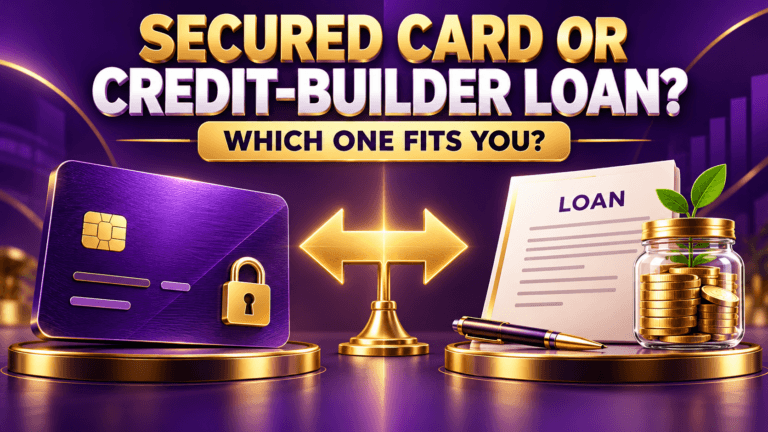
A credit-builder loan is designed to help you build credit while putting money aside. Instead of receiving all the borrowed money immediately, the lender generally holds it in a secured savings account or certificate of deposit. You make scheduled payments, the lender reports your payment activity, and the saved principal is released according to the provider’s terms.
Credit-builder loans may be helpful when you have bad credit, limited credit or no established credit history. However, they are not credit-repair magic. They cannot remove accurate negative information, and no provider can promise a particular score increase.
Before opening one, make sure its payment will fit comfortably into your monthly budget. A missed or late payment could work against the exact credit history you are trying to establish.

Our six credit-builder loan selections
- Self: Best for convenient nationwide online access
- CreditStrong: Best for multiple online plan choices
- DCU: Best potential low-APR option for eligible members
- Patelco ScoreUp: Best for a larger savings target
- MoneyLion: Best for people who want bundled financial tools
- Republic Bank: Best for a traditional bank-and-CD structure
Quick comparison
| Provider | Published amount or example | Term | Credit reporting | Important limitation |
|---|---|---|---|---|
| Self | Several plans; one published example is $35 per month | Example: 24 months | Equifax, Experian and TransUnion | Interest and fees reduce the final amount received |
| CreditStrong | Instal example starts at $28 per month for a $1,010 tradeline | Example: 48 months | Equifax, Experian and TransUnion | A longer term can result in more interest paid |
| DCU | $500–$3,000 | 12–24 months | Confirm before applying | Credit-union membership is required |
| Patelco ScoreUp | $500–$5,000 | 6–36 months, depending on amount | Confirm before applying | Membership and eligibility requirements apply |
| MoneyLion | Up to $1,000 | Typically 12 months | Equifax, Experian and TransUnion | Monthly membership cost can make it expensive |
| Republic Bank | $500–$1,500 | 12, 18 or 24 months | Confirm before applying | Availability may depend on the bank’s service area |
Important: Information is current as of October 2026 based on published provider details. Rates, fees, availability, eligibility and reporting practices can change. Review the provider’s current agreement before opening an account.
1. Self Credit Builder Account
Why Self made the list
Self is one of the most recognizable online credit-building companies. Its Credit Builder Account is available through an online application and does not provide the full loan proceeds upfront. Instead, the loan principal is held in a bank certificate of deposit while you make monthly payments.
Self reports payment activity to Equifax, Experian and TransUnion. After the account is completed, you receive the principal saved in the account minus applicable interest and fees.
One published example shows a $35 monthly payment for 24 months. Under that example, total payments are $840, the estimated amount returned is $717 and the cost is approximately $123. Your available plan and actual terms may differ.
- Online availability across the United States
- Payments reported to all three major credit bureaus
- Several monthly payment levels may be available
- Combines credit building with structured savings
- You will not receive the complete loan amount upfront.
- Interest and fees reduce the final payout.
- A late payment could be reported and hurt your credit.
Affiliate link. Verify that this redirect reaches your approved Self offer before publishing.
2. CreditStrong Instal
Why CreditStrong made the list
CreditStrong is offered through Austin Capital Bank, an FDIC-insured bank. Its Instal product places the loan proceeds into a locked savings account while your scheduled payments are reported to the three major credit bureaus.
A currently published example uses a $28 monthly payment, a $1,010 loan amount and a 48-month term. The example lists total payments of $1,359, a $1,010 payout and a $349 finance charge. That makes it important to consider the total cost—not just the manageable-looking monthly payment.
CreditStrong says there is no hard credit inquiry for this product, and customers can generally cancel or pay off the account early under its terms.
- Reports to Equifax, Experian and TransUnion
- No hard credit pull advertised for Instal
- Multiple credit-building products are available
- Monthly FICO Score access may be included
- The example term is longer than several competing options.
- A longer term can increase the total finance charge.
- No credit-score increase is guaranteed.
Affiliate link. Read the current plan agreement and pricing before enrolling.

3. DCU Credit Builder Loan
Why DCU made the list
Digital Federal Credit Union—now operating as a division following its merger with First Tech—offers a more traditional credit-union credit-builder loan.
Published terms show loan amounts from $500 to $3,000 and repayment periods of 12 to 24 months. DCU advertised a fixed 5.00% APR when this comparison was prepared, although rates can change.
That published rate is substantially lower than the example rates offered by several online providers in this comparison. However, you must qualify for and maintain credit-union membership.
- Competitive published APR
- Loan amounts between $500 and $3,000
- Shorter terms than some online plans
- Access to other credit-union services after joining
- Membership eligibility requirements apply.
- The application may be less convenient than an app-only provider.
- Confirm current credit-bureau reporting before accepting the loan.
This is a regular informational link, not an affiliate link.
4. Patelco ScoreUp Credit Builder Loan
Why Patelco made the list
Patelco Credit Union’s ScoreUp Credit Builder Loan offers a wider range of loan amounts than most products in this comparison. Published amounts run from $500 to $5,000.
Loans from $500 to $2,500 may have terms of up to 24 months, while amounts from $2,501 to $5,000 may extend up to 36 months. Patelco published a fixed 5.50% APR and no setup or origination fee when this article was prepared.
The funds are placed into a dedicated ScoreUp Savings Account and released as the loan is repaid according to the credit union’s terms.
- Amounts as high as $5,000
- Competitive published interest rate
- No published setup or origination fee
- May help establish a larger savings balance
- Patelco membership is required.
- A larger balance may create an unnecessarily high payment.
- Verify current bureau reporting and eligibility before applying.
This is a regular informational link, not an affiliate link.
5. MoneyLion Credit Builder Plus
Why MoneyLion made the list
MoneyLion Credit Builder Plus combines a credit-builder loan with membership features such as credit monitoring and other financial tools. Published information lists loan amounts of up to $1,000, a 12-month term and reporting to all three major credit bureaus.
MoneyLion has published APRs ranging from 5.99% to 29.99%, depending on eligibility and final terms. It also charges a Credit Builder Plus membership fee advertised at $19.99 per month when this article was prepared.
That membership would total approximately $239.88 over 12 months before adding loan interest. The bundled features may be useful to some borrowers, but people who only need an installment account may find a credit-union loan less expensive.
- Reports payments to all three major credit bureaus
- No hard credit inquiry advertised
- Credit monitoring and additional financial tools included
- Shorter term than some competing online plans
- The membership fee can significantly increase the total cost.
- APR varies considerably by customer.
- You may be paying for features you do not need.
This is a regular informational link, not an affiliate link.
6. Republic Bank Credit Builder Loan
Why Republic Bank made the list
Republic Bank offers a straightforward credit-builder product with published loan amounts from $500 to $1,500 and terms of 12, 18 or 24 months.
The proceeds are placed into a certificate of deposit while you repay the loan. After the final payment, the CD funds are released to you according to the bank’s agreement. The CD may also earn interest while the funds are held.
This could appeal to someone who prefers working with a conventional bank instead of managing the entire process through a financial app.
- Simple bank-and-CD arrangement
- Three repayment-term choices
- Loan amounts suitable for a modest savings goal
- Funds may earn CD interest while held
- Availability may be limited by location or service area.
- Current APR is not prominently published on the product overview.
- Ask which credit bureaus receive payment information.
This is a regular informational link, not an affiliate link.
Do not open a credit-builder loan if the payment is uncertain
A credit-builder loan only makes sense when you can make every payment on time without sacrificing rent, utilities, food, insurance or other essential expenses.
If your budget is already stretched, consider starting with free credit-building actions. Review your reports, dispute genuine errors, bring existing accounts current and ask whether your landlord or utility payments can be reported. Opening another account is not automatically the best answer.
How to choose the right provider
- Check the full cost. Compare total payments with the money you will eventually receive.
- Ask which bureaus receive reports. Three-bureau reporting generally provides broader coverage.
- Choose a safe payment. Do not select a bigger plan simply because it creates a larger tradeline.
- Review cancellation rules. Find out what happens to your savings if you close the loan early.
- Check for hard inquiries. Some providers advertise no hard pull, but you should verify before submitting an application.
- Understand membership fees. A low APR can be misleading when a product carries an additional monthly subscription.
- Set up payment reminders. One missed payment can undermine the purpose of the account.

Which credit-builder loan is best?
Self may be the most convenient choice when you want an online account with broad availability and three-bureau reporting.
CreditStrong may fit borrowers who want several plan options and access to a monthly FICO Score, although the total finance charge deserves close attention.
DCU or Patelco may offer better value if you qualify for membership and their current rates remain lower than those offered by app-based providers.
MoneyLion is worth considering only when you will genuinely use its bundled membership features. Otherwise, the monthly membership may make it needlessly expensive.
Republic Bank may appeal to someone who prefers a conventional bank and CD-based arrangement, provided the service is available in their area.
Frequently asked questions
Can a credit-builder loan remove negative accounts?
No. A credit-builder loan adds new payment activity, but it does not remove accurate collections, late payments, charge-offs or other legitimate negative information.
Will a credit-builder loan guarantee a higher score?
No provider can guarantee a specific score increase. Results depend on your complete credit profile, the scoring model being used and how every account on your reports is managed.
Can late credit-builder loan payments hurt my credit?
Yes. When a provider reports both on-time and late payments, missing the due date could hurt your payment history. Read the reporting policy and make every payment on time.
Should I open more than one credit-builder loan?
Usually, one affordable account is enough. Opening multiple loans creates additional payments, fees and opportunities to miss a due date without necessarily producing a better result.
How long does credit building take?
Credit building is gradual. Providers must first report account activity, and your progress will depend on payment history, balances, existing negative items and the age of your accounts.
Continue building your credit knowledge
Before applying, read Building Credit the Smart Way. You can also learn how often to check your credit reports and review our guide to building credit without spending money.
For an independent explanation of credit-building products, visit the Consumer Financial Protection Bureau.
The Credit Queen’s bottom line
A credit-builder loan can help establish new payment history and structured savings, but it should never become another financial burden.
Compare the total cost, choose a payment that feels easy—not merely possible—and verify all terms directly with the provider. Your goal is sustainable progress, not an overnight score promise.
Educational disclaimer: This content is for general educational purposes and is not individualized financial, legal or credit-repair advice. Credit outcomes vary. Review all disclosures and consider speaking with a qualified financial professional before entering a financial agreement.